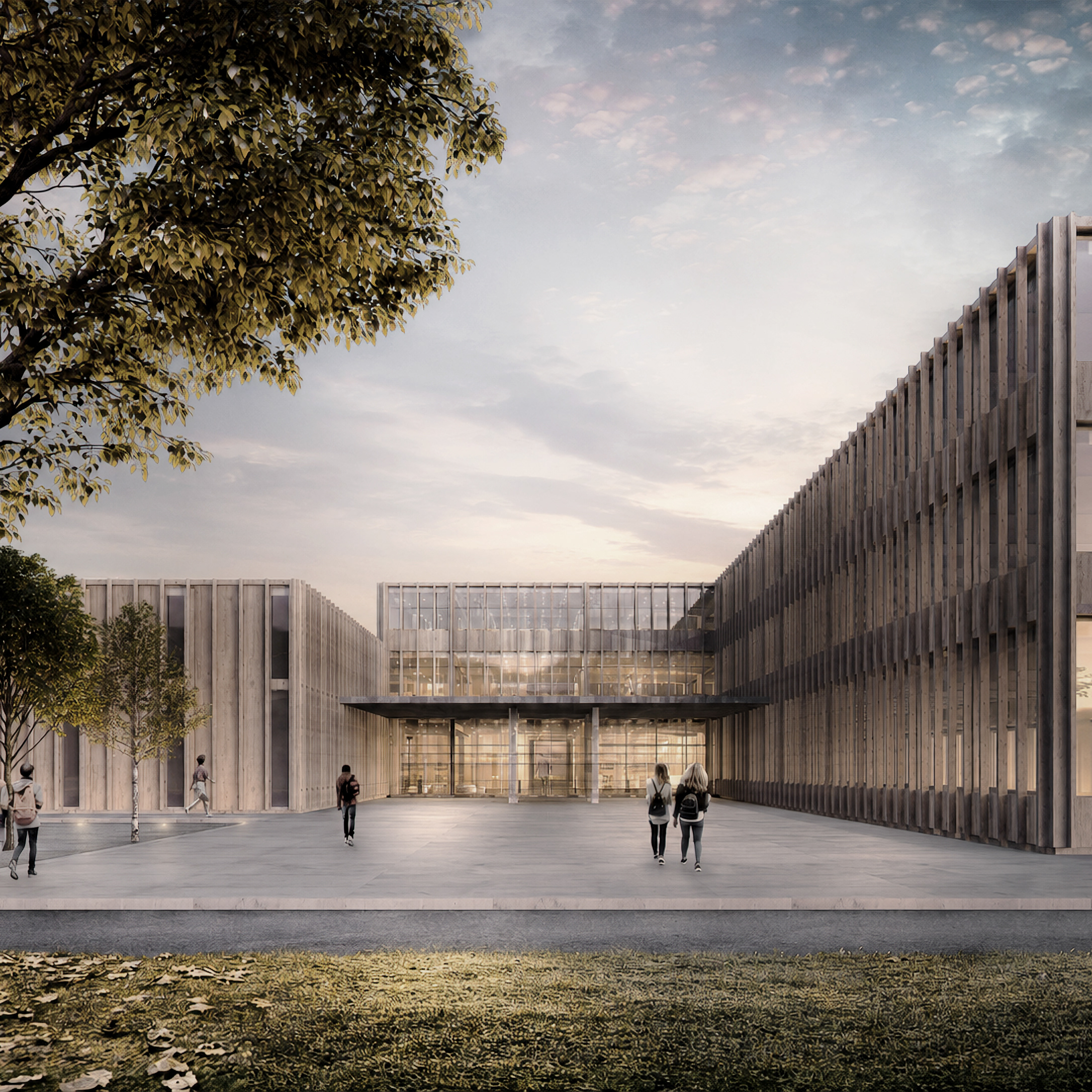
A House Anchored in the Mountain
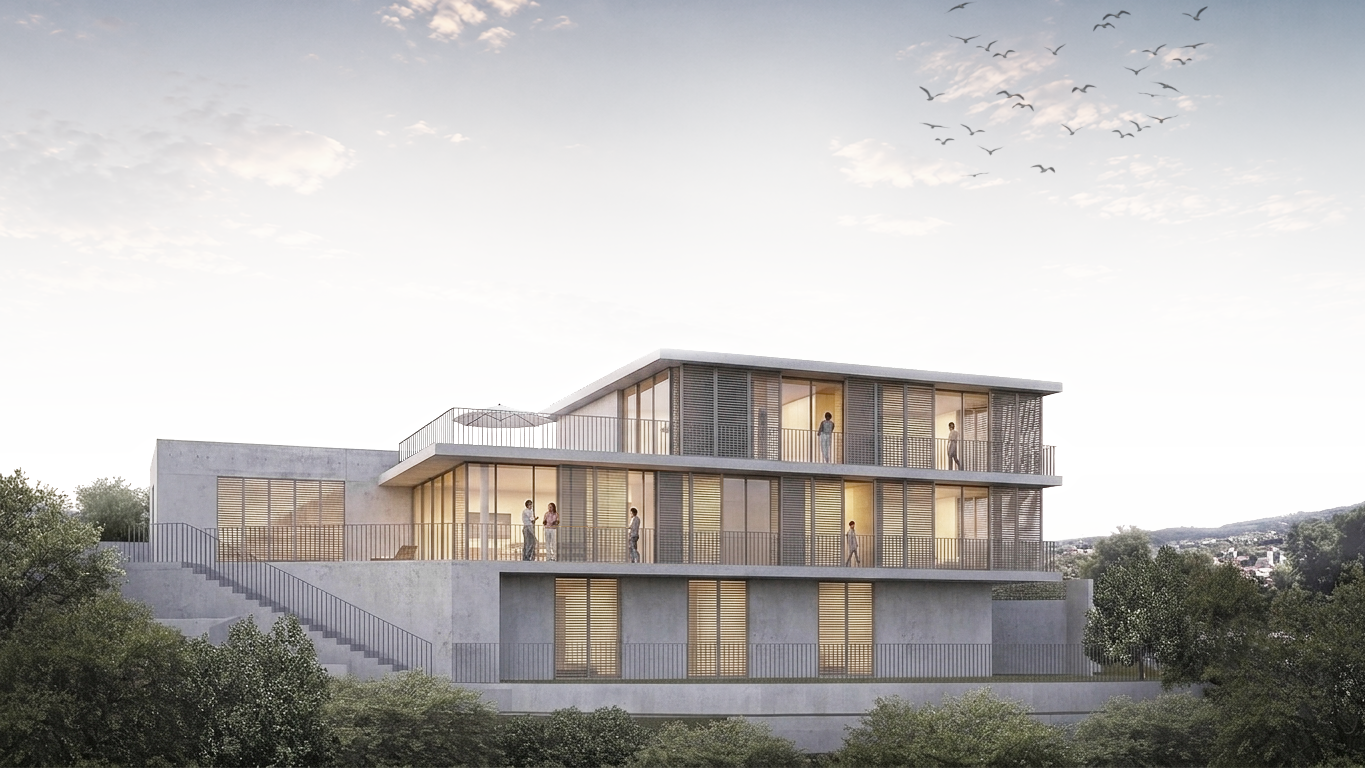
The site occupies a south-facing slope in Vallée Kfour, Kesserwan, Mount Lebanon, at an elevation affording an unobstructed panorama over the Lebanese coastline and the Mediterranean beyond. The building negotiates the pronounced gradient rather than imposing upon it — embedding its lower levels into the hillside and stepping outward toward the sea as it rises, maintaining a discreet profile from above while revealing its full spatial depth only as one descends from the road.
Mass, Void, and the Horizon
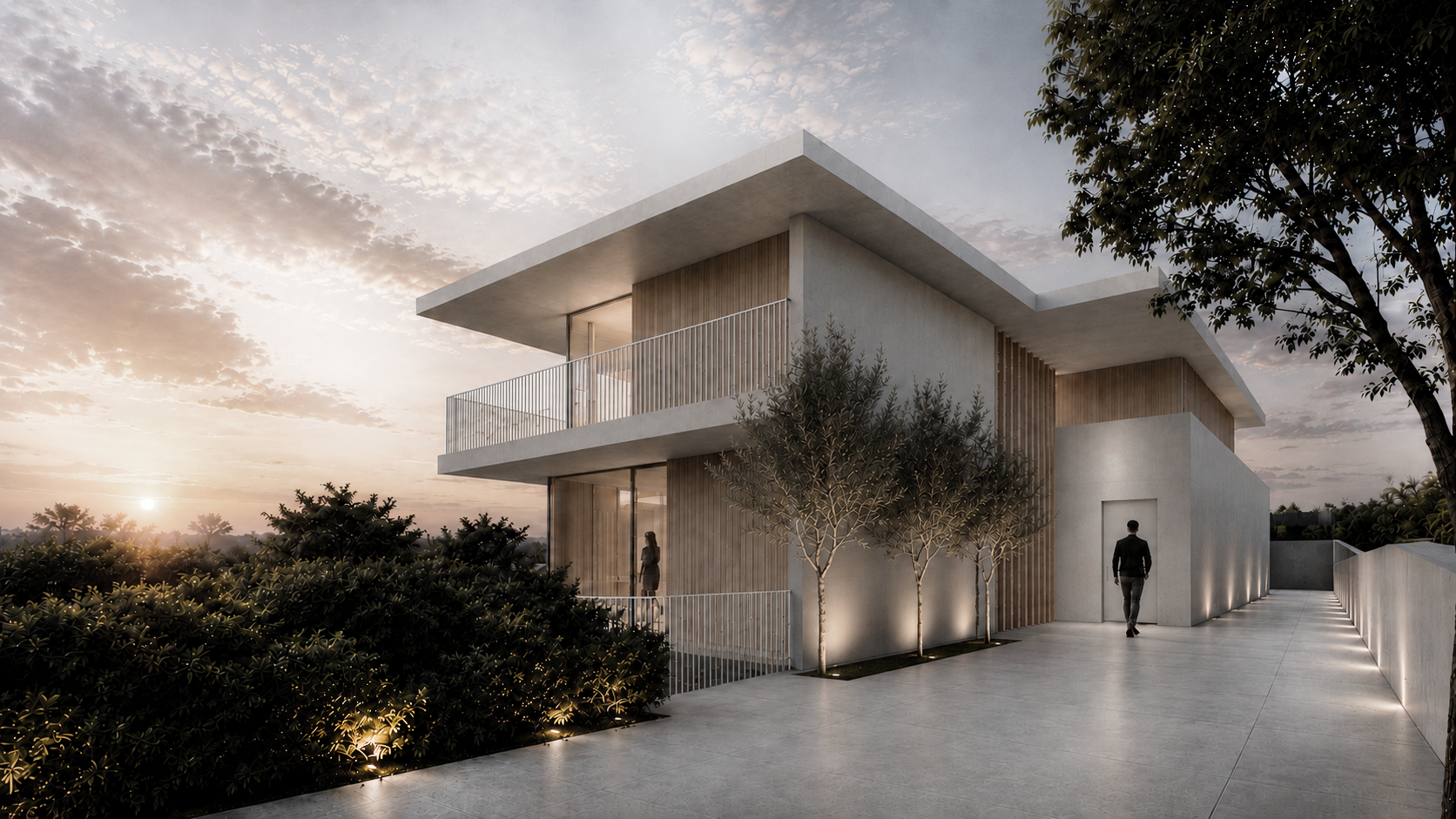
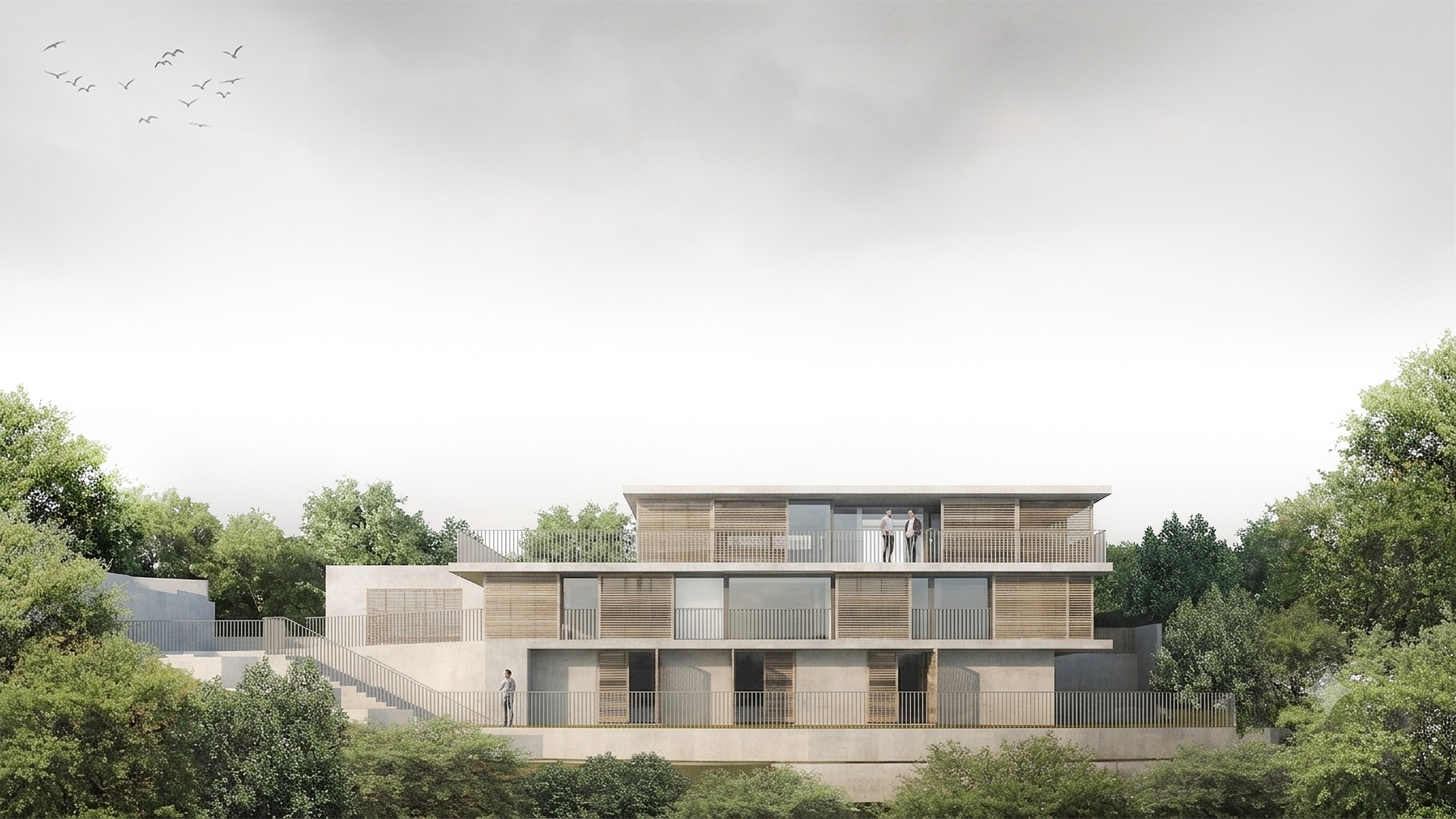
The design is organised around a tension between the weight and opacity of in-situ concrete and the transparency of large-format glazed openings that dissolve the boundary between interior and panoramic landscape. Cantilevered concrete slabs extend beyond the glazed planes as brise-soleil, modulating the southern exposure; vertical timber louvres further mediate light and air, introducing a warmth of texture that tempers the austerity of the raw concrete. In elevation, the composition reads as receding horizontal bands: a concrete base merging with the hillside retaining walls; a piano nobile of living spaces opening to terrace and pool; and a contained upper volume terminating in a roof terrace belvedere over the coastal plain.
Basement — Embedded in the hillside
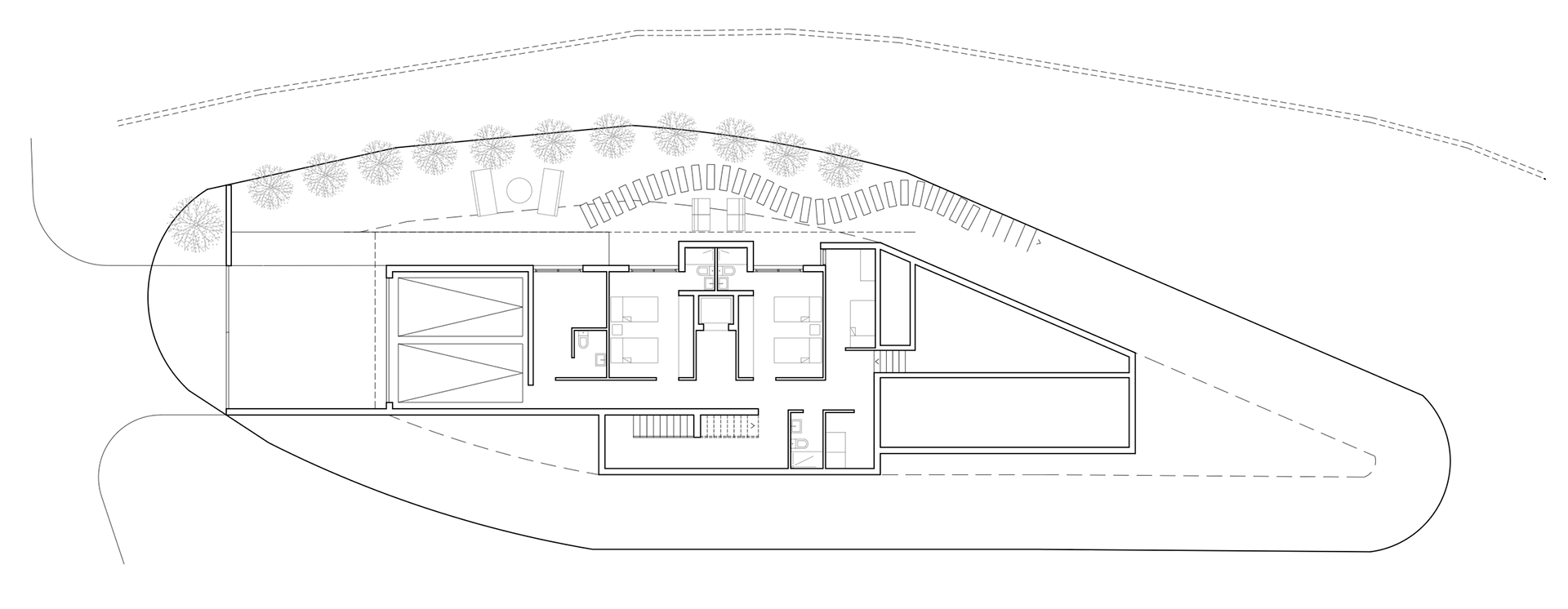
Entirely excavated into the mountain and invisible from the exterior, this level is entered via a diagonal ramp from the lower road — its bold geometric cut through the plan lending arrival an almost ceremonial quality. Guest bedroo.m suites flank a shared corridor, served by a planted lightwell at the northern edge that draws diffuse daylight into the subterranean rooms. A large volume to the east, insulated by the surrounding mass of earth, is reserved for programme to be confirmed: wine cellar, home cinema, gym, or utility.
Ground Floor — Social and landscape
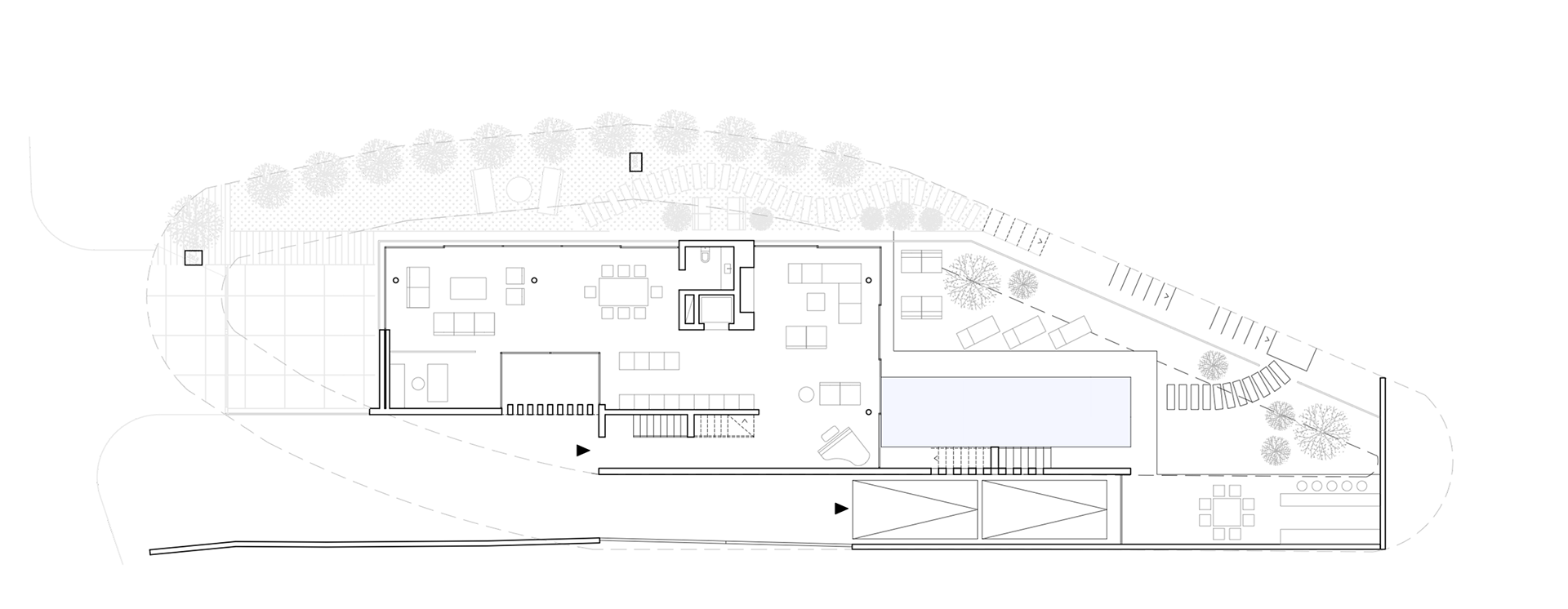
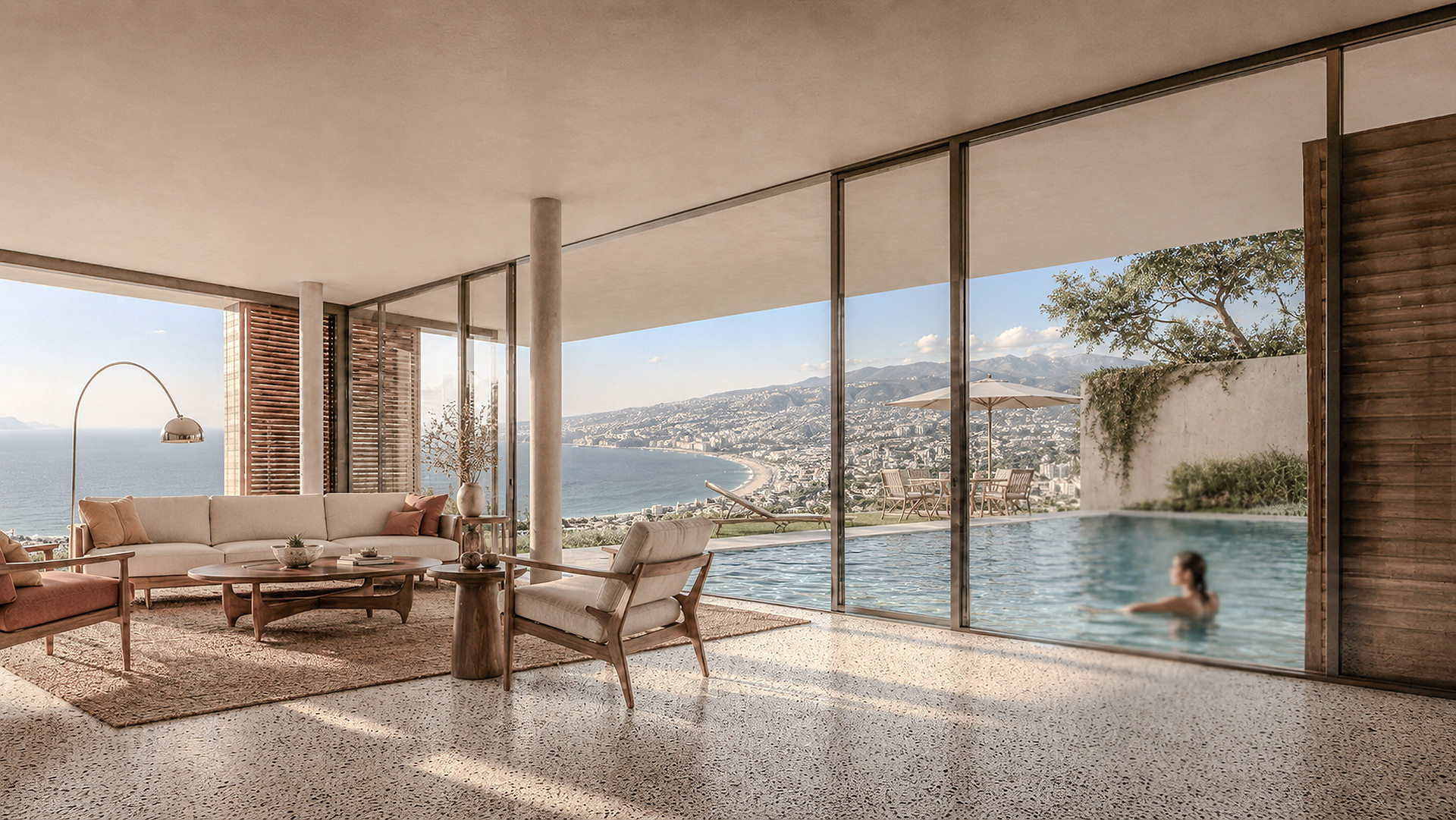
The social heart of the house. A covered processional entry traverses the site longitudinally before opening into a continuous south-facing living, dining, and kitchen plan. Full-height glazing gives onto a covered terrace and a linear pool whose still surface reflects sky and sea. Service spaces and the connecting stair are tucked against the hillside, leaving the principal rooms entirely free for light and view.
First Floor — Private realm
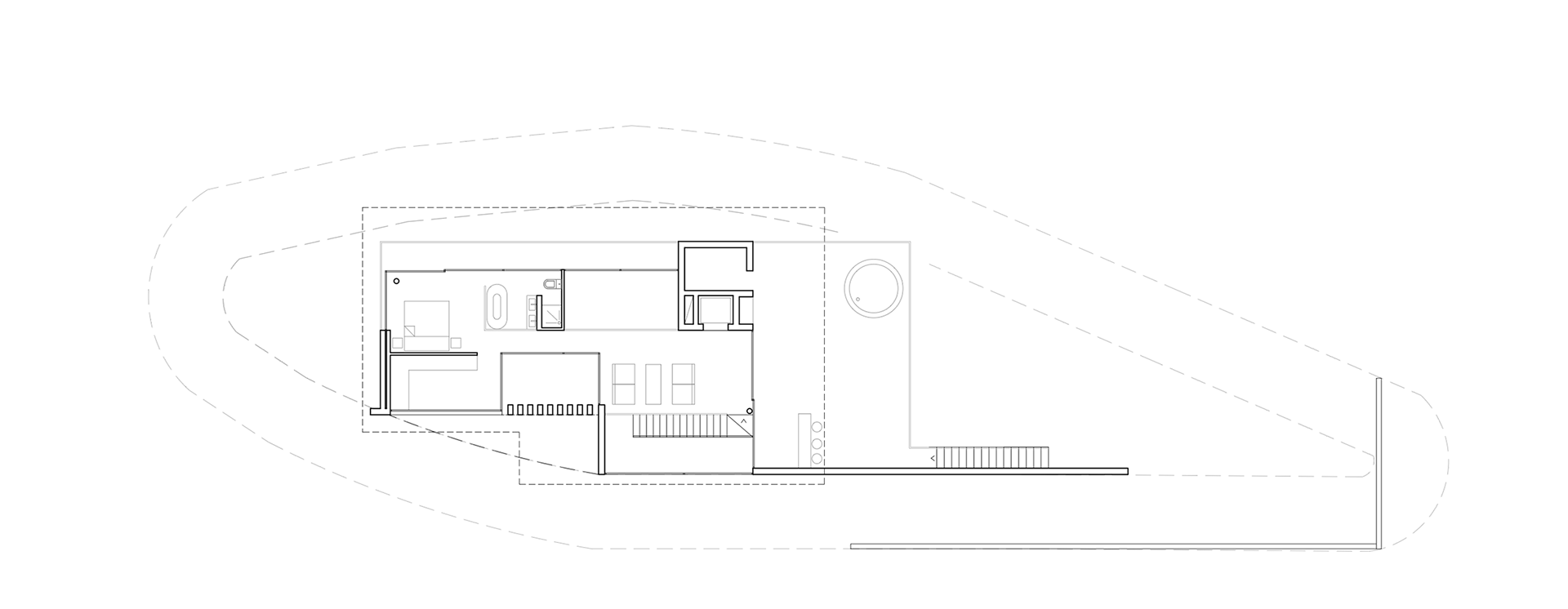
Set back from the main facade to generate the roof terrace below, this level accommodates the master suite, bathrooms, and a small sitting room, all oriented south and west for the coastal panorama and afternoon light. A circular element — freestanding bath or sculptural planting vessel — punctuates the eastern end as a counterpoint to the orthogonal plan. The roof terrace, enclosed by a fine metal balustrade, serves as a private belvedere over the full breadth of the coastal plain.
A Restrained Palette, Precisely Employed
Board-formed in-situ concrete, large-format terrazzo, natural timber louvres and joinery, and slim-profile steel-framed glazing constitute the entire material register. Interiors in warm plaster and pale stone establish a domestic softness against the exposed structure; furniture is spare and mid-century in sensibility — organic forms in wood and linen, Mediterranean in spirit without regional cliché. At dusk the concrete darkens to near-monochrome while interior light spills through the timber screens in amber bands, rendering the house a lantern suspended between the hillside and the night sky over the sea.
Une maison ancrée dans la montagne
Le terrain occupe un versant exposé au sud à Vallée Kfour, Kesserwan, Mont-Liban, à une altitude offrant un panorama dégagé sur le littoral libanais et la Méditerranée. Le bâtiment négocie la pente prononcée plutôt que de lui imposer une forme — encastrant ses niveaux inférieurs dans la colline et s’avançant vers la mer à mesure qu’il s’élève, conservant un profil discret vu du dessus tout en révélant sa pleine profondeur spatiale à mesure que l’on y descend depuis la route.
Masse, vide et horizon
Le projet s’organise autour d’une tension entre le poids et l’opacité du béton coulé en place et la transparence de larges ouvertures vitrées qui dissolvent la frontière entre l’espace intérieur et le paysage panoramique. Des dalles en béton se prolongent en brise-soleil portés en porte-à-faux, modulant l’exposition sud ; des lames verticales en bois médiatisent lumière et air, introduisant une chaleur de texture qui tempère l’austérité du béton brut. En élévation, la composition se lit comme des bandes horizontales en retrait successif : une base en béton fondue dans les murs de soutènement ; un piano nobile d’espaces de vie ouverts sur terrasse et piscine ; et un volume supérieur contenu se terminant en terrasse-toit belvédère sur la plaine côtière.
Sous-sol — Encastré dans la colline
Entièrement excavé dans le rocher et invisible depuis l’extérieur, ce niveau est accessible par une rampe diagonale depuis la voie inférieure — dont la découpe franche dans le plan confère à l’arrivée un caractère presque cérémoniel. Des suites d’hébergement flanquent un couloir commun, éclairées par un patio planté au bord nord qui insuffle une lumière diffuse dans les pièces souterraines. Un grand volume à l’est, isolé par la masse de terre environnante, est réservé à un programme à confirmer : cave à vins, cinéma privé, salle de sport ou local technique.
Rez-de-chaussée — Social et paysage
Cœur social de la maison. Une séquence d’entrée couverte traverse le site longitudinalement avant de s’ouvrir sur un plan continu — séjour, salle à manger, cuisine — orienté au sud. Des vitrages pleine hauteur donnent sur une terrasse couverte et une piscine linéaire dont la surface calme reflète le ciel et la mer. Les espaces de service et l’escalier sont adossés au flanc côté colline, laissant les pièces principales entièrement libres pour la lumière et la vue.
Premier étage — Domaine privé
En retrait de la façade principale pour générer la terrasse-toit du niveau inférieur, ce plateau accueille la suite parentale, les salles de bains et un petit salon, orientés sud et ouest vers le panorama côtier et la lumière d’après-midi. Un élément circulaire — baignoire autoportante ou bac à plantations — ponctue l’extrémité orientale en contrepoint à la rigueur orthogonale du plan. La terrasse-toit, close d’une fine balustrade métallique, constitue un belvédère privé ouvert sur l’ensemble de la plaine côtière.
Une palette restreinte, employée avec précision
Béton coulé en place à banches, terrazzo grand format, lames et menuiseries en bois naturel, et vitrages à profils fins constituent l’ensemble du registre matériel. Les intérieurs en enduit chaud et pierre claire instaurent une douceur domestique face à la franchise structurelle du béton apparent ; le mobilier est épuré, d’une sensibilité mi-siècle — formes organiques en bois et lin, méditerranéen dans l’esprit sans cliché régionaliste. Au crépuscule, le béton s’assombrit jusqu’au quasi-monochrome tandis que la lumière intérieure se répand à travers les lames de bois en bandes ambrées, rendant la maison semblable à une lanterne suspendue entre la colline et le ciel nocturne au-dessus de la mer